
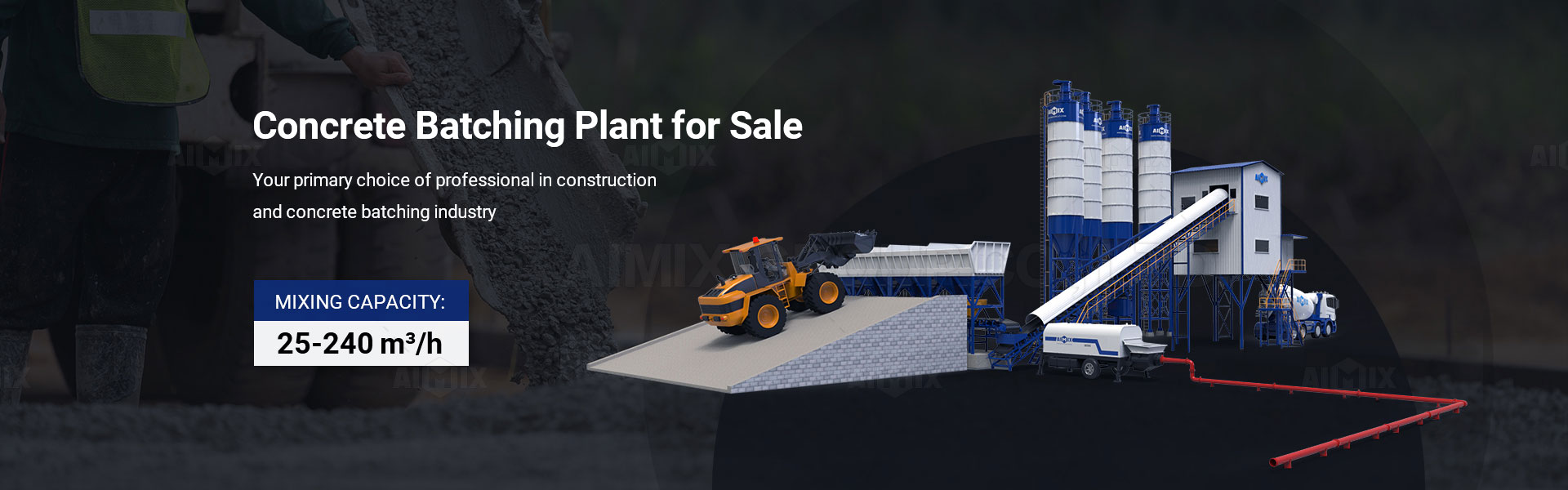
When planning to start a concrete plant business for sale, understanding how material type and mix design influence the overall cost of a concrete batching plant is essential. These factors directly affect equipment selection, operational efficiency, and long-term profitability. Investors and contractors, whether purchasing a China concrete plant or exploring local options, must carefully consider these variables before establishing a concrete batching plant business.

Influence of Material Type on Concrete Batching Plant Cost
The type of raw materials used in concrete production has a direct impact on the cost of concrete batching plant. Aggregates, cement, sand, water, and admixtures differ in hardness, abrasiveness, and moisture content.
Hard or abrasive materials, such as basalt or granite, require reinforced mixers, wear-resistant conveyors, and heavy-duty crushers. These features increase the initial capital investment in equipment but extend operational life and reduce frequent maintenance costs. Conversely, softer materials like limestone or river sand are easier to process, allowing for simpler, lower-cost machinery.
Additionally, moisture content in aggregates affects batching accuracy. High-moisture materials may require additional drying or water control systems, increasing both installation and operational expenses. For investors considering a China concrete plant, it is important to verify that the equipment can handle the specific material types available in the local market.
Role of Mix Design in Determining Plant Specifications
Mix design is another critical factor that influences plant cost. Concrete mixes vary in terms of cement content, aggregate ratios, water-cement ratio, and admixture types. High-performance or specialty mixes—such as lightweight concrete, fiber-reinforced concrete, or high-strength concrete—require precise batching, additional storage silos, and automated dosing systems.
A plant designed to handle multiple mix designs will have a higher initial cost but offers flexibility to meet diverse customer requirements. For example, a concrete batching plant business targeting both residential and commercial projects may need the capability to produce standard mixes for general construction and advanced mixes for infrastructure projects. In this scenario, investing in an automated system with multiple weighers and mixers becomes a cost-effective decision over time.

Impact on Operational Costs
Material type and mix design also affect operational costs. Harder aggregates increase wear and tear on equipment, leading to higher maintenance expenses and the need for spare parts. Similarly, complex mix designs with multiple admixtures require precise dosing, which may increase labor requirements or necessitate automated solutions.
By selecting appropriate machinery based on material hardness and mix requirements, operators can balance plant cost and operational efficiency. Many entrepreneurs purchasing a China concrete plant find that slightly higher initial investments in durable and automated equipment result in lower total cost of ownership, ensuring steady production without unexpected downtime.
Considerations for Concrete Plant Business Setup
When setting up a concrete batching plant business, the choice of materials and mix design influences both equipment layout and financial planning. Investors must consider:
-
Plant capacity and modularity: A plant designed for flexibility can accommodate varying aggregate sizes and mix designs. Modular plants allow future expansion without major capital investment.
-
Automation and monitoring systems: Automated systems ensure accurate batching, consistent quality, and minimal wastage—particularly important when working with multiple mix designs.
-
Supplier selection: Choosing a reliable China concrete plant manufacturer guarantees access to spare parts, technical support, and customizations to suit material types.
By addressing these factors during planning, entrepreneurs can optimize production efficiency and reduce the likelihood of costly adjustments post-installation.

Strategic Benefits for Investors
Understanding how material type and mix design affect cost of concrete batching plant offers several strategic advantages for a concrete plant business for sale. Properly matching plant capacity and design to the intended materials ensures high-quality concrete production and customer satisfaction.
Additionally, flexibility in mix design allows the business to target multiple market segments, from standard residential projects to high-performance infrastructure work. For investors evaluating a China concrete plant, reviewing plant specifications in relation to local material availability and mix requirements helps avoid costly over-specification or underperformance.
Conclusion
Material type and mix design are crucial determinants of both initial and operational costs in a concrete batching plant. Hard or abrasive aggregates and specialized concrete mixes may require higher upfront investment in reinforced machinery, automated dosing, and multiple storage silos, but they offer long-term benefits in durability, efficiency, and versatility.
Entrepreneurs starting a concrete batching plant business or exploring a concrete plant business for sale should carefully evaluate these factors when selecting equipment. Partnering with a reputable China concrete plant manufacturer ensures that the plant is capable of handling local material conditions, diverse mix designs, and evolving market demands. By aligning material and mix considerations with plant design, investors can achieve optimal production efficiency, consistent concrete quality, and sustainable profitability.